Ethical AI for Prosecutors: Exploring Responsible Use of AI in Prosecution
Friday, April 17th, 2026 at 1:00 PM ET
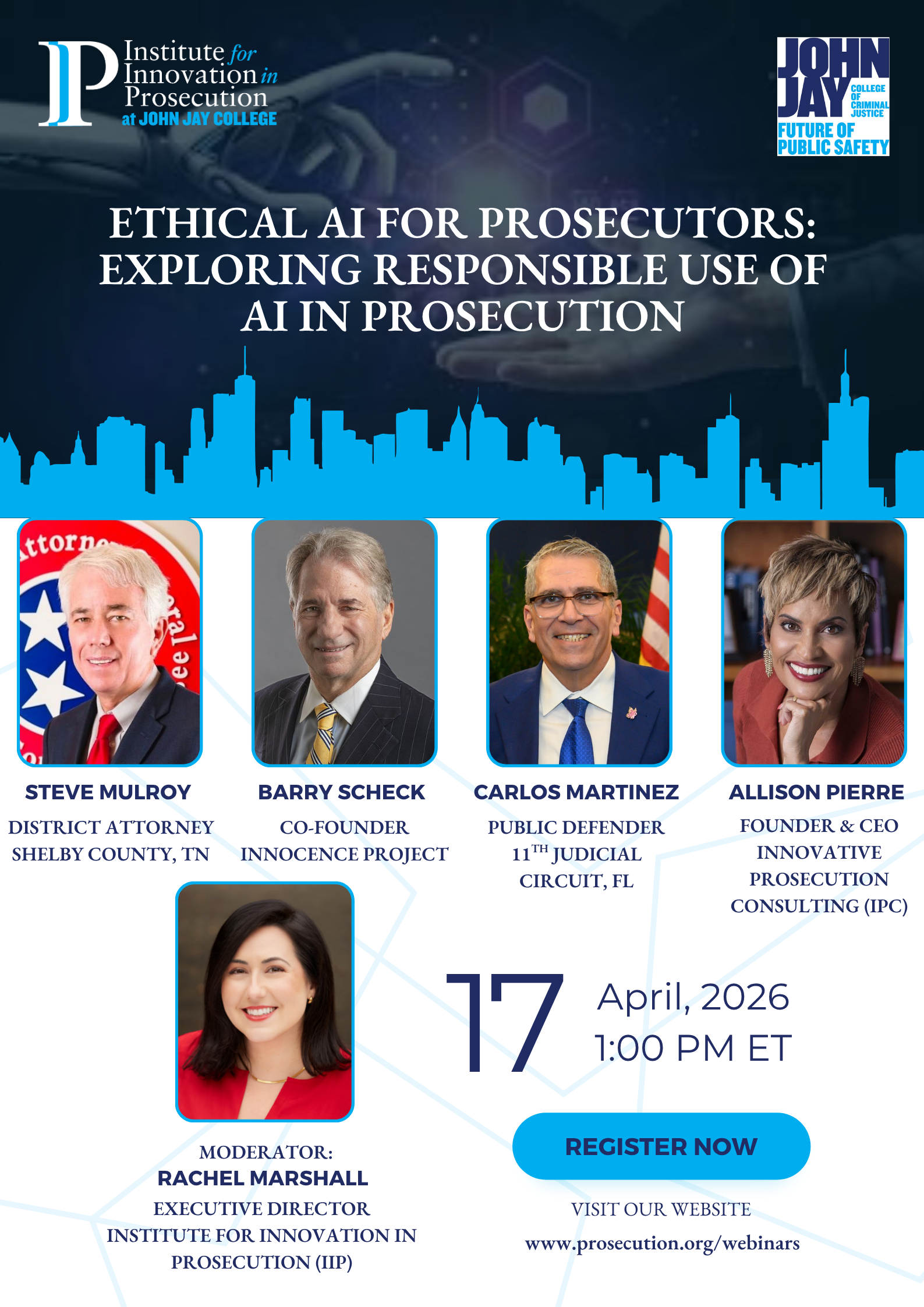
With AI seemingly impacting every part of our lives, what is its role for prosecutors? What responsibilities do prosecutors have to create policies and practices to guide their attorneys in ethical use of AI? Our panelists offer a variety of perspectives and guidance for how prosecutors can wield AI responsibly, ethically, and in furtherance of their goal of pursuing justice. How should prosecutors approach confidentiality concerns? How can AI improve transparency? How does AI present opportunities to identify and rectify longstanding disparities in criminal legal outcomes? Prosecutors and public defenders alike can learn about emerging opportunities to use AI to improve their work. Our panelists include:
Steve Mulroy, District Attorney, Shelby County, TN;
Barry Scheck,Co-Founder, The Innocence Project;
Carlos J. Martinez,Public Defender, 11th Judicial Circuit, FL;
Allison C. Pierre, Esq.,Founder and CEO, Innovative Prosecution Consulting; and
Moderator Rachel Marshall, Executive Director, IIP
Our panelists bring decades of cutting-edge leadership experience from all corners of the criminal legal system. Their diverse experiences anchor the discussion in practical, actionable takeaways that can inform your office’s use of AI today.
Barry Scheck
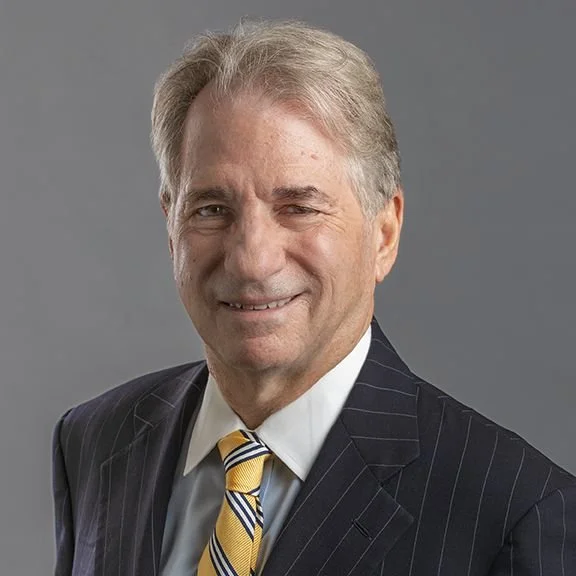
Co-Founder, The Innocence Project
Professor Scheck is known for his landmark litigation that has set standards for forensic applications of DNA technology. Since 1988, his and Peter Neufeld's work in this area has shaped the course of case law across the country and led to an influential study by the National Academy of Sciences on forensic DNA testing, as well as important state and federal legislation. He and Neufeld coauthored with Jim Dwyer Actual Innocence: Five Days to Execution and Other Dispatches from the Wrongly Convicted.
Scheck is a commissioner on New York's Forensic Science Review Board, a body that regulates all of the state's crime and forensic DNA laboratories. He is the first vice president of the National Association of Criminal Defense Lawyers and serves on the board of the National Institute of Justice's Commission on the Future of DNA Evidence. In addition to the work he has done through Cardozo's Innocence Project, which has represented dozens of men who were exonerated through post-conviction DNA testing, Scheck has represented such notable clients as Hedda Nussbaum, O. J. Simpson, Louise Woodward, and Abner Louima. Prior to joining the Cardozo faculty, he was a staff attorney at the Legal Aid Society of New York.
Public Defender, 11th Judicial Circuit, FL
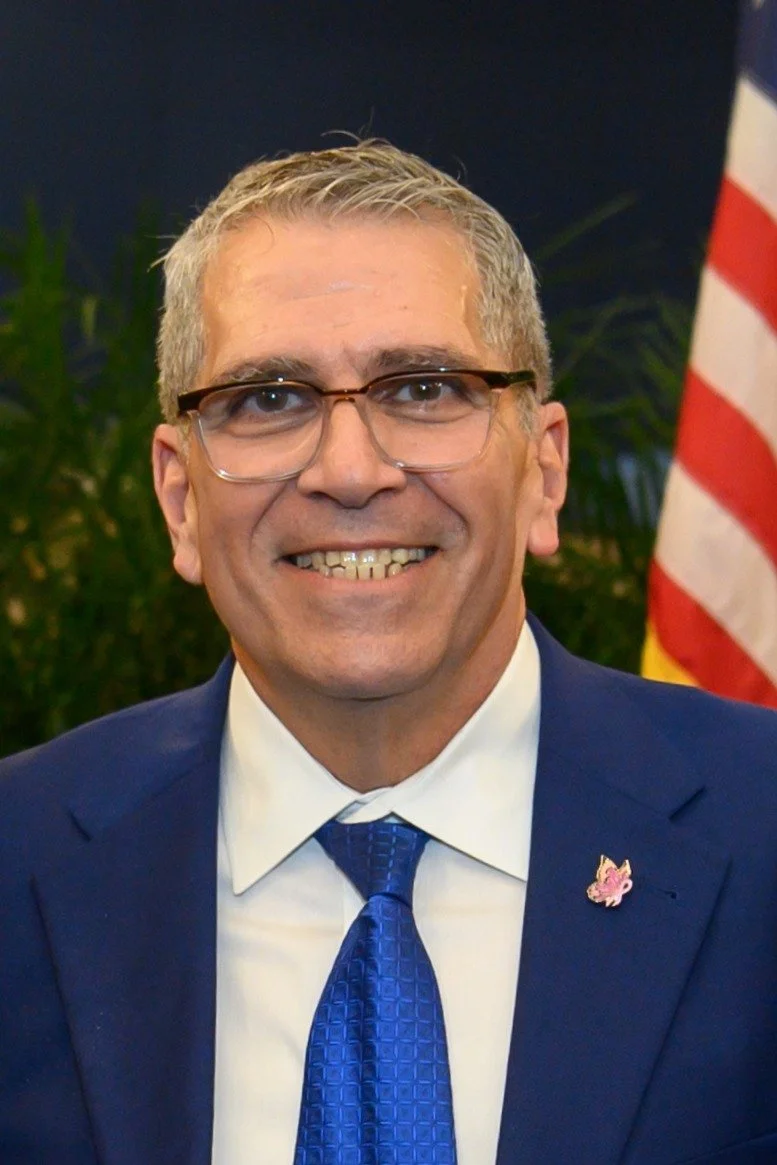
Carlos Martinez
Carlos J. Martinez has dedicated his professional life to public service, using his legal talents in service of the poor. He arrived to Miami from Cuba on a 1969 Freedom Flight. Carlos learned the meaning of hard work and determination at an early age. Since he was 10 years old until he began working at gas stations, Carlos often helped his dad, Celedonio, after school. Carlos would mop floors and clean the Little Havana church where his father worked as a maintenance man and where his mother, Yara, was the church’s receptionist.
Carlos credits his parents and his religious upbringing for his passion for social justice and for helping the poor. “I am living my American dream. I am doing something I love. I am fortunate to work in an office with highly dedicated individuals where we can help people who are less fortunate and whose freedom and future well-being is in jeopardy. By serving as the Public Defender, I’m honoring my mother and father’s values and the sacrifices they made for us to live and prosper in a free country.”
At 16, Carlos was hired as a car wash attendant at an Exxon station. Within three years, Carlos was simultaneously managing six gas stations in Miami-Dade and Broward counties. He worked full-time to pay for his undergraduate college education. He attended Miami Dade College, the University of Texas-Austin and graduated from Florida International University with a B.A. in Political Science in 1985. In 1990, Carlos received his J.D. from the University of Miami.
Carlos represented indigent clients at the trial and appellate level in Miami-Dade, Florida and Bellingham, Washington. Before becoming the Public Defender, Carlos was a top administrator in the Public Defender’s office for 12 years and led litigation efforts, designed and implemented management and legal reforms, and drafted legislation and grant proposals.
He was elected public defender in 2008, and re-elected in 2012, 2016, 2020 and 2024 without opposition. Carlos is the first Cuban-American Public Defender and the only elected Hispanic public defender in the U.S. As public defender, Carlos manages an office of about 400 employees, handling approximately 75,000 cases each year.
“Fighting for individual rights and equal justice, for the downtrodden, the despised, the voiceless and the invisible, has not just given me great professional satisfaction, it has given meaning to my life,” Carlos said.
Carlos created volunteer initiatives such as the “Redemption Project” (helping former clients regain their civil and employment rights), “Play It Smart” (teaching young people how to interact with law enforcement), “Consequences Aren’t Minor” (educating adolescents and adults about the direct and collateral consequences of illegal behavior and arrest), the Equal Justice Roundtable (a faith community collaboration to address social injustice and improve public safety), a statewide public defender management training program, and Juvenile Justice CPR (Charting a Path to Redemption), a legal reform initiative designed to help troubled kids achieve the American dream. Carlos led the statewide effort to ban the indiscriminate shackling of detained children in juvenile courts. He has worked tirelessly to address the crisis of minority children being cycled from the schoolhouse to the jail house, and to protect the confidentiality of juvenile records.
Founder and CEO, Innovative Prosecution Consulting
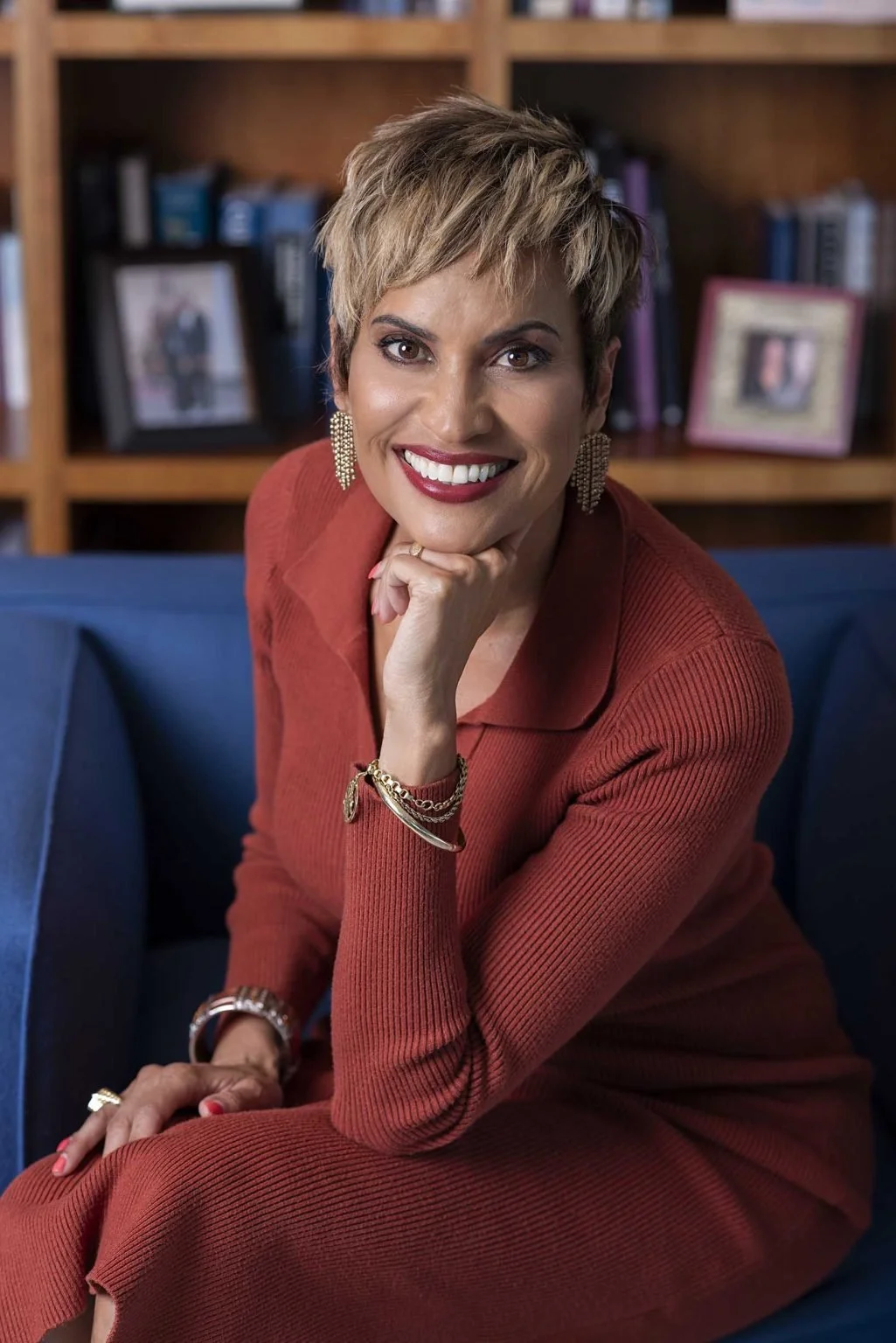
Allison C. Pierre, Esq.
Allison C. Pierre, Esq., is a former prosecutor and commercial litigator who understands the unique pressures public sector lawyers and policymakers face, from heavy caseloads to limited budgets. She believes data, technology, and AI have the power to reshape how the public sector works.
Her expertise includes policy compliance, treatment program evaluation, dashboards, case management systems, and organizational change management. Through IPC, Allison helps agencies design and implement AI and data programs that improve daily operations while building evidence-based, collaborative, and transparent cultures.
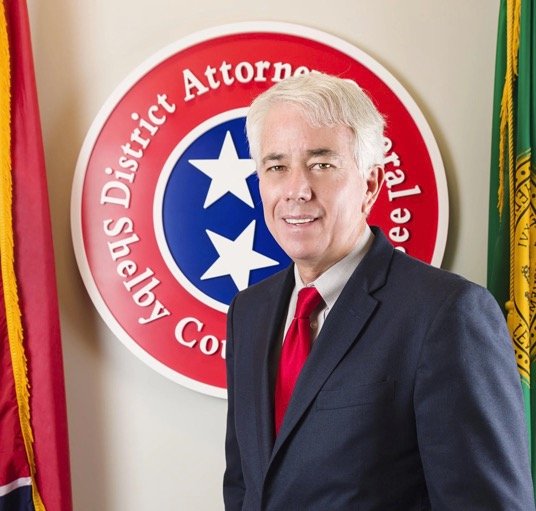
Shelby County District Attorney, TN
Steven J. Mulroy is the District Attorney for Shelby County, Tennessee. He was elected DA in August 2022. DA Mulroy oversees a total staff of 238, including more than 110 prosecutors.
He attended Cornell University, graduating with Distinction in All Subjects, then attended William & Mary Law School, where he graduated Order of the Coif.
In the 1990s he served in the U.S. Justice Department in Washington, D.C., first as a civil rights litigator and later as a federal prosecutor. In 2000, he became a law professor at the University of Memphis, where for 22 years he taught and published in the areas of Criminal Law, Criminal Procedure, Constitutional Law, and Civil Rights. During that time he also engaged in pro bono criminal and civil rights litigation in numerous cases at the trial and appellate level in state and federal court. At the time of his election as DA, he was the Bredesen Professor of Law. Shortly after being sworn in as DA, he became an Emeritus Professor.
Mulroy was elected in 2006 to the Shelby County Commission, where he served for 8 years. While on the County Commission, Mulroy drafted Shelby County's first ethics, living wage, animal welfare, and “cash for tires” ordinances, as well as the first-ever legislation at any level in Tennessee barring LGBT discrimination. He successfully pushed for substantial increases in county funding for homelessness and pre-K education, and an end to the illegal practice of “48-hour holds” of suspects without probable cause. During the body's 2011 redistricting, he led the successful effort to switch from large 3-Commissioner multimember districts to neighborhood-based single-member districts, arguing, among other things, that the latter led to more competitive elections.
Mulroy is the author of Rethinking US election law: Unskewing the System, as well as dozens of scholarly articles on criminal law and civil rights. He’s published articles in such national publications as SLATE, NEWSWEEK, THE NEW REPUBLIC, SALON, THE HILL, and the HUFFINGTON POST. He’s been a legal commentator for MSNBC, Fox News, and CNN, and has testified before Congress and the U.S. Civil Rights Commission. Both his blood type and his chirpy personal motto is B positive.
Executive Director, Institute for Innovation in Prosecution at John Jay College
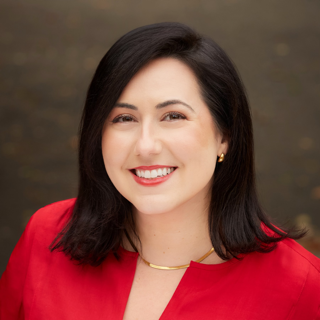
Rachel Marshall
Steve Mulroy
Rachel Marshall is the Executive Director of the Institute for Innovation in Prosecution.
Rachel previously served as the Director of Communications and Policy Advisor at the San Francisco District Attorney’s Office, following nearly a decade working as a public defender in Alameda County, California. Rachel has extensive expertise in the criminal legal system and efforts to reform it, as well as experience in media, policy, and advocacy.
Rachel graduated from Stanford Law School and Brown University. After law school, she clerked for federal District Court Judge David O. Carter in the Central District of California. Prior to law school, she taught high school history for three years in the Bronx